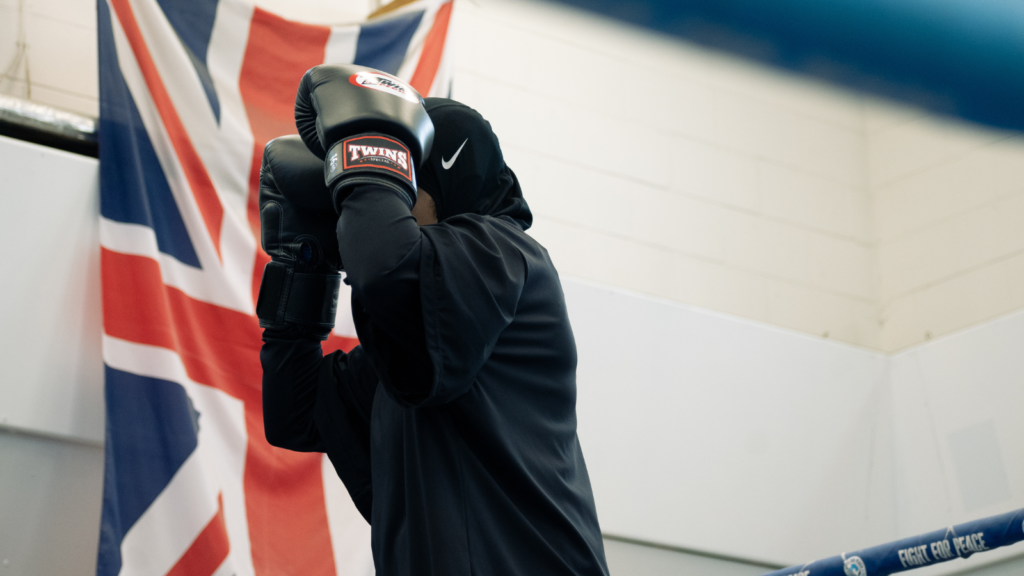
Fight for Peace is pleased to launch a new resource titled Engaging Muslim Women in Male-Dominated Sports. Created in collaboration with Muslim Sport Foundation and built from the lived experience of Muslim women who attend and coach at Fight for Peace, this piece seeks to increase sector understanding and awareness of the issues women and girls face, focusing on the experiences of Muslim women and how to overcome these challenges.
This resource is not an exhaustive list of solutions, and neither is it a silver bullet, but it brings five principles to the forefront. Principles that organisations can embrace as a starting point for building a more inclusive environment.
Sport has the incredible power to build confidence, a sense of belonging, and stronger communities. It is not simply the way to a healthier, happier life, but it has the potential to grow skills that improve all areas of our lives, not just sports performance. When we foster greater participation in sports, the benefits extend to everyone in society, as Sky’s research stated – an active nation is a more prosperous one, too (2025).
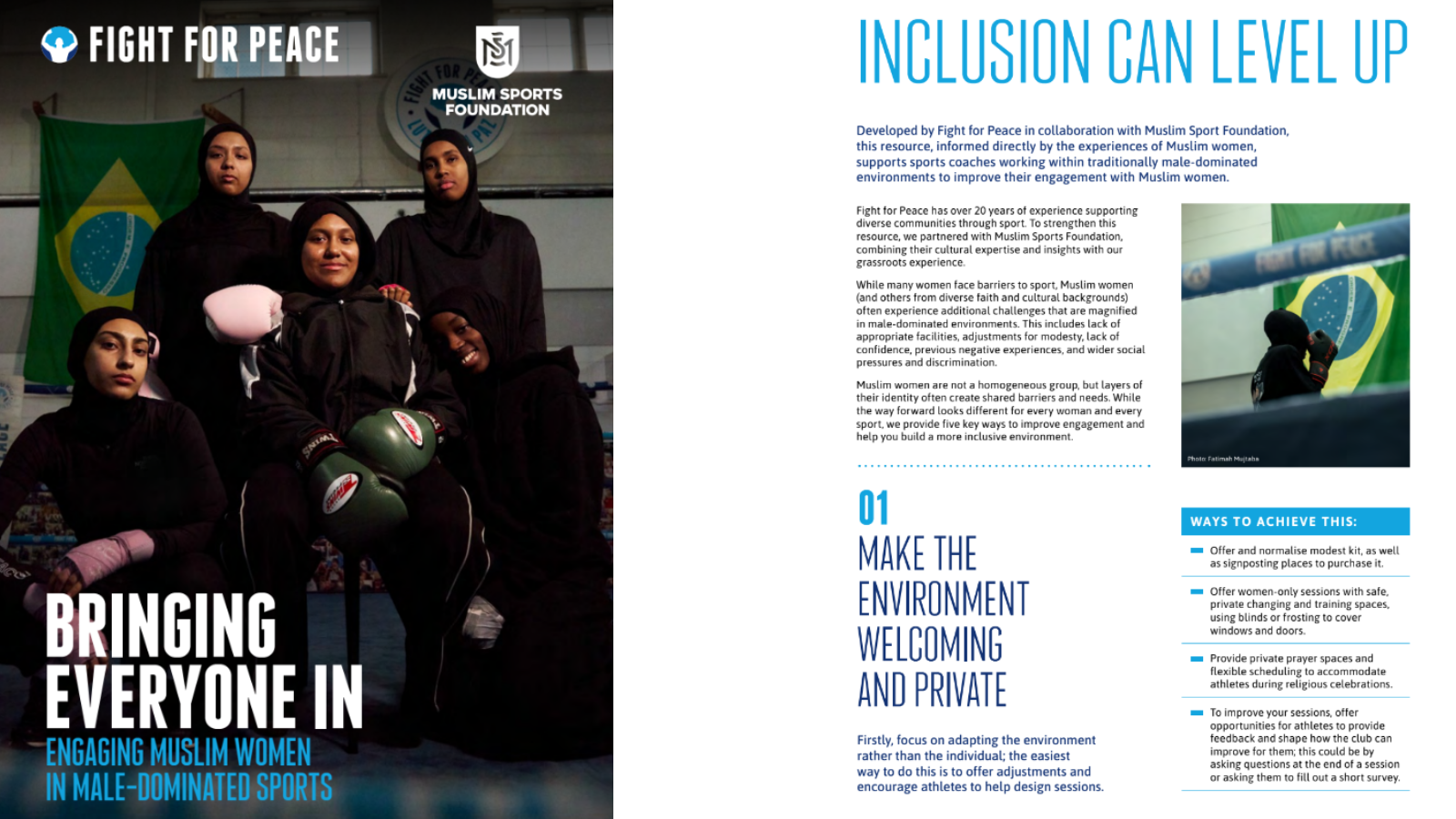
Yet barriers to participation persist. As of 2026, data shows that while 97% of British Muslim women want to increase their activity levels, they remain one of the least active demographics in the UK due to systemic and environmental barriers (Muslimah Sports, 2025).
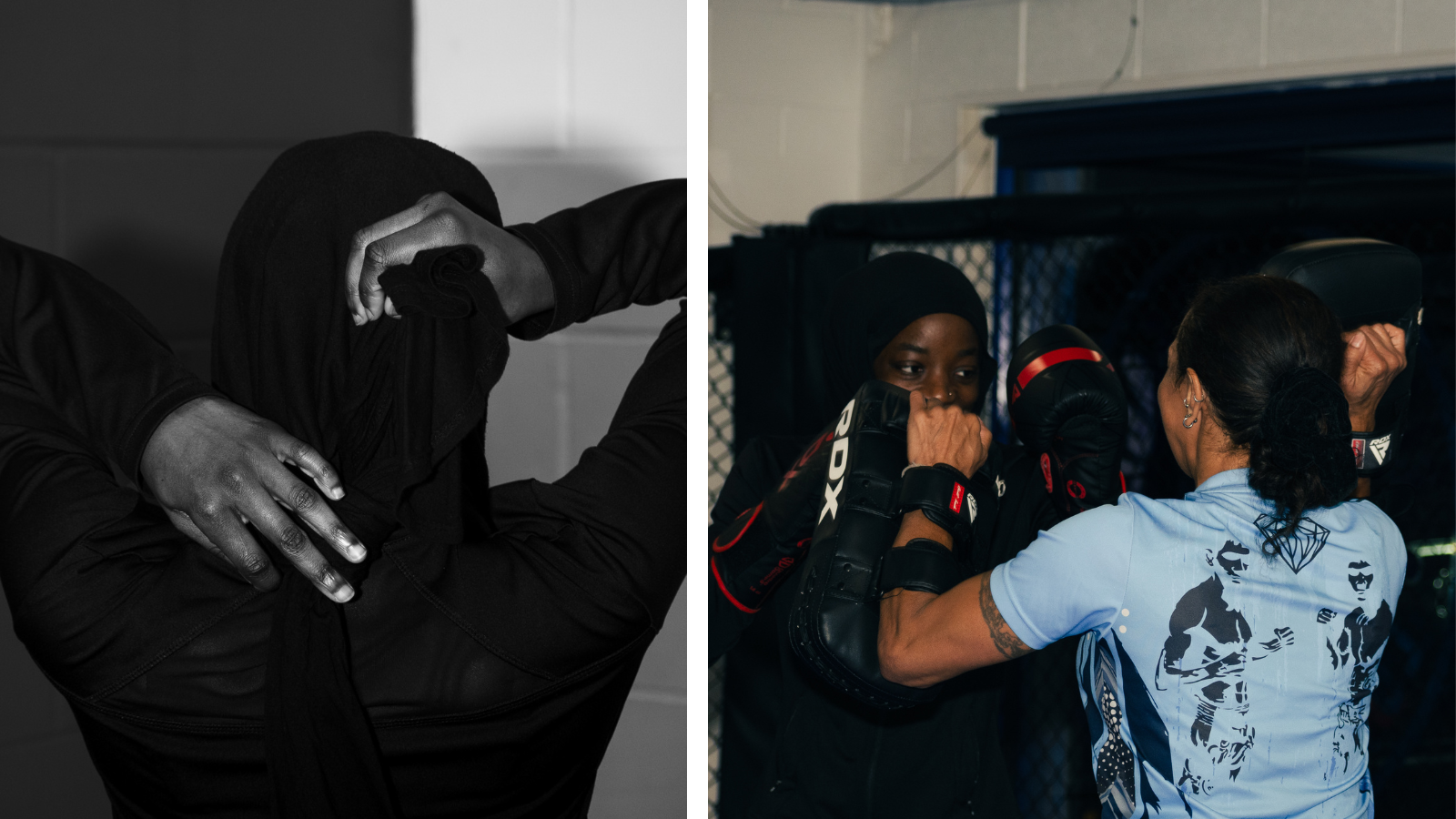
These barriers are often amplified in traditionally male-dominated sporting environments, such as combat sports, strength-based sports, and other spaces where women are the minority and the culture has been shaped around masculine norms.
For instance, the intersection of Islamophobia, misogyny, and gendered expectations creates a unique and significant barrier to participation, especially as these issues are increasing across the UK.
As Muslim women are disproportionately targeted by gendered Islamophobia, the fear of harassment in public spaces is often amplified (UK Parliament, 2024). When sporting environments fail to proactively address these risks, they become intimidating or unwelcoming, directly undermining the safety and confidence required to engage in sport.
Without intentional changes, these environments will continue to exclude Muslim women, but we can change this. Here we saw an opportunity, and thus the resource was born. We drew on over 20 years of experience supporting diverse communities through sport and strengthened this resource by partnering with Muslim Sports Foundation, combining their cultural expertise and insights with our grassroots experience.
This resource outlines five principles: make the environment welcoming and private; remove practical barriers to taking part; educate staff and build a respectful coaching culture; increase representation and leadership opportunities; and build relationships with your local community. Alongside a definition of these principles, the resource offers practical ways to bring these to life. As described, one way to increase representation and leadership opportunities is to diversify representation on social media and have young people lead its creation.
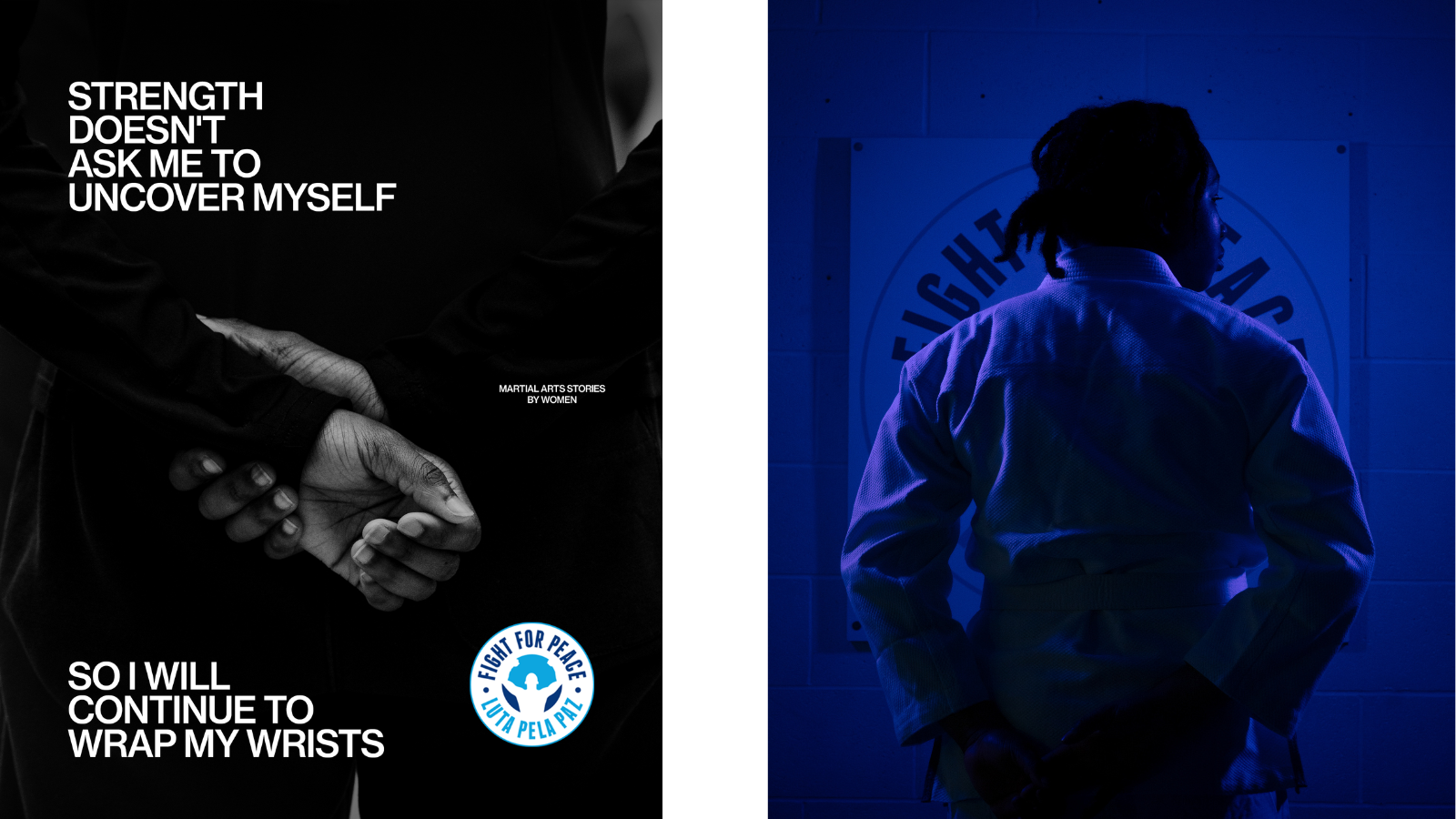
For example, the ‘Martial Arts Stories by Women’ campaign by Fight for Peace’s Young Creatives showcases the powerful stories of young women athletes, particularly Muslim women. This project perfectly illustrates the intersection of youth leadership and diverse social media representation.
Woven throughout the principles are also examples of this in action – from first-hand experiences from athletes at Fight for Peace, to details of Muslim Sports Foundations’ Active Sunnah initiative. Although we’ve integrated these principles into a clear and concise narrative, we also offer a deep dive version that includes the research behind this material. This is for those interested in learning more about our thought process, and can be found at the end of the resource.
It’s important to conclude that Muslim women are not a homogeneous group. Faith, ethnicity, gender, and culture intersect differently for everyone, but these layers often create shared barriers and needs.
While the way forward looks different for every woman and every sport, this resource is here to help shape that future for the better. If we can make a collective effort to improve our engagement with Muslim women, it can only be hoped that this will help foster wider social unity, too.
This resource is part of a larger training package currently in development. A training that seeks to engage women and girls in male-dominated sports, break barriers to participation, and make sport more inclusive. Scheduled for release in 2027, we are bringing together diverse perspectives and data from across the sports sector in order to create the most impactful training for grassroots clubs and coaches.
Stay tuned for upcoming updates about the training, and if you’d like to offer insights or contribute data towards it, please contact grace@fightforpeace.net.
References
Sky & Public First. (2025). Game changing: How sport gives every girl a better chance.
Muslimah Sports Association. (2025). MSA impact report 2023–2025.
UK Parliament, House of Commons. (2024). Women’s sport. Culture, Media and Sport Committee.