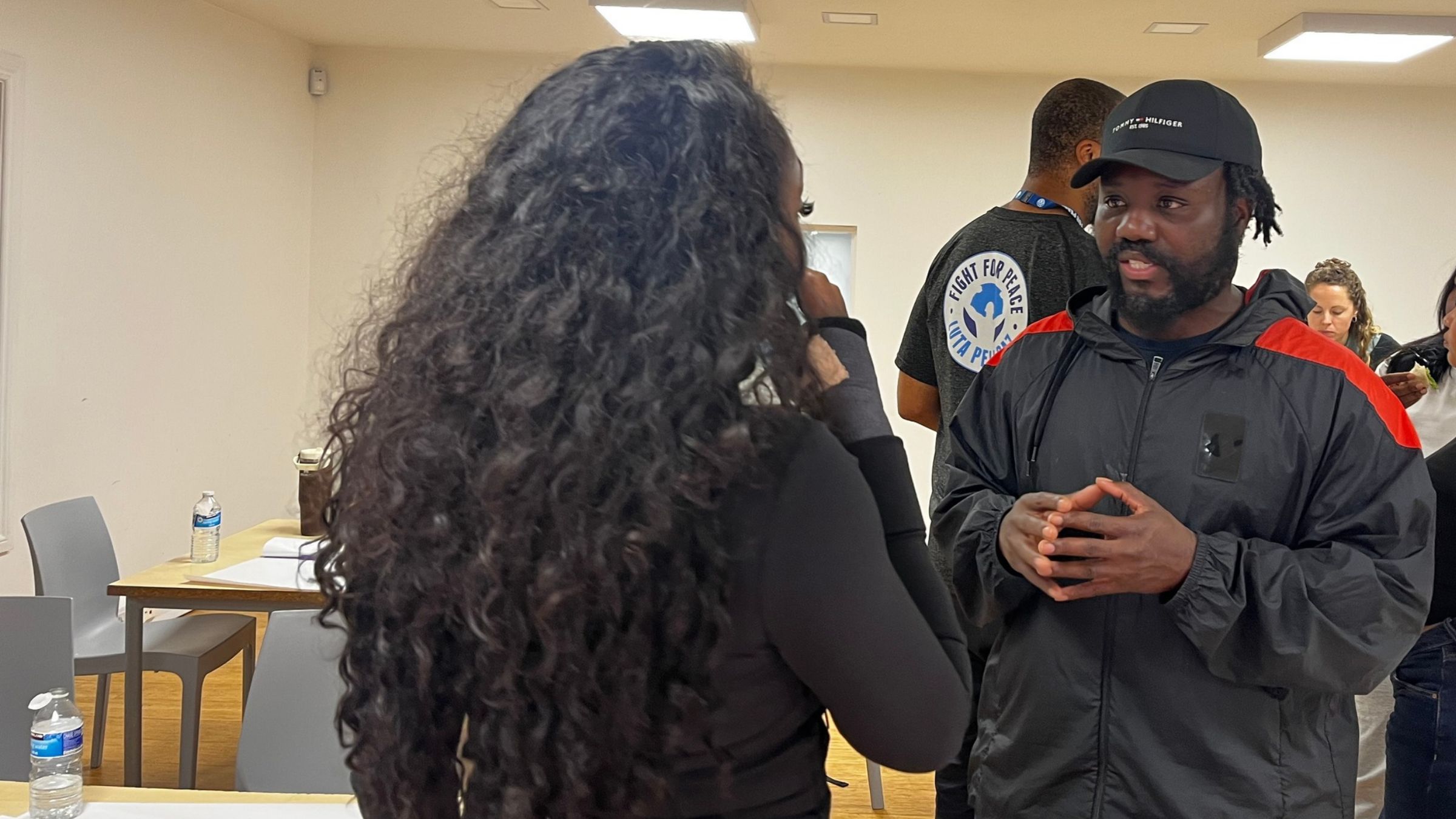
We recently welcomed a new member to the Fight for Peace team, bringing a breadth of expertise in youth work. Youth Work Manager Steven knows the power of providing safe spaces for young people in our communities. We caught up with him to find out more about his vision for youth work and personal development at Fight for Peace, and what our young members can look forward to.
Can you tell us a bit about yourself and why you chose Fight for Peace as your place of work?
“I’m originally from a sports background, and over the years I’ve had experience playing football semi-professionally, being around professional athletes, and, more importantly, developing the individual. That could be in the sports world, or in youth work settings.
Over the last 15 years I’ve had the privilege of blending both worlds together, working with fantastic athletes, creating development plans and setting goals to help them reach the highest level they can. I use those same techniques when working with young people in the community, helping them recognise the challenges they’re facing and identify the transferable skills they can take from those environments into new ones to succeed.
The narrative is usually that young people are not capable. I want to help more young people understand how capable they actually are, rather than seeing their environment or circumstances, or the things they’ve been through, as a hindrance to where and how they can be. They are in control of that narrative.”
What’s your vision for youth work and personal development at Fight for Peace?
“I’m very much about the philosophy of doing things with people. I don’t like doing things to or for people. I like doing things with people. That means we tend to journey with young people over a long period of time and work for the long haul.
I want to build more structure around what we’re doing in terms of mentoring. We’ve got great youth workers who are currently doing mentoring based on their individual skill sets. We’re working towards bringing all those different skills together and making sure they fit into a wider organisational approach, rather than an individual approach.
Another is developing more group discussions within the sessions, where we get young people together to tackle topics that can be somewhat controversial in some spaces. Fight for Peace is amazing in that respect because, due to the nature of the youth workers and the people involved in those conversations, it becomes a learning point rather than a controversial point. I want to have more of those kinds of conversations across the organisation, focusing on themes such as setting goals and organisation.”
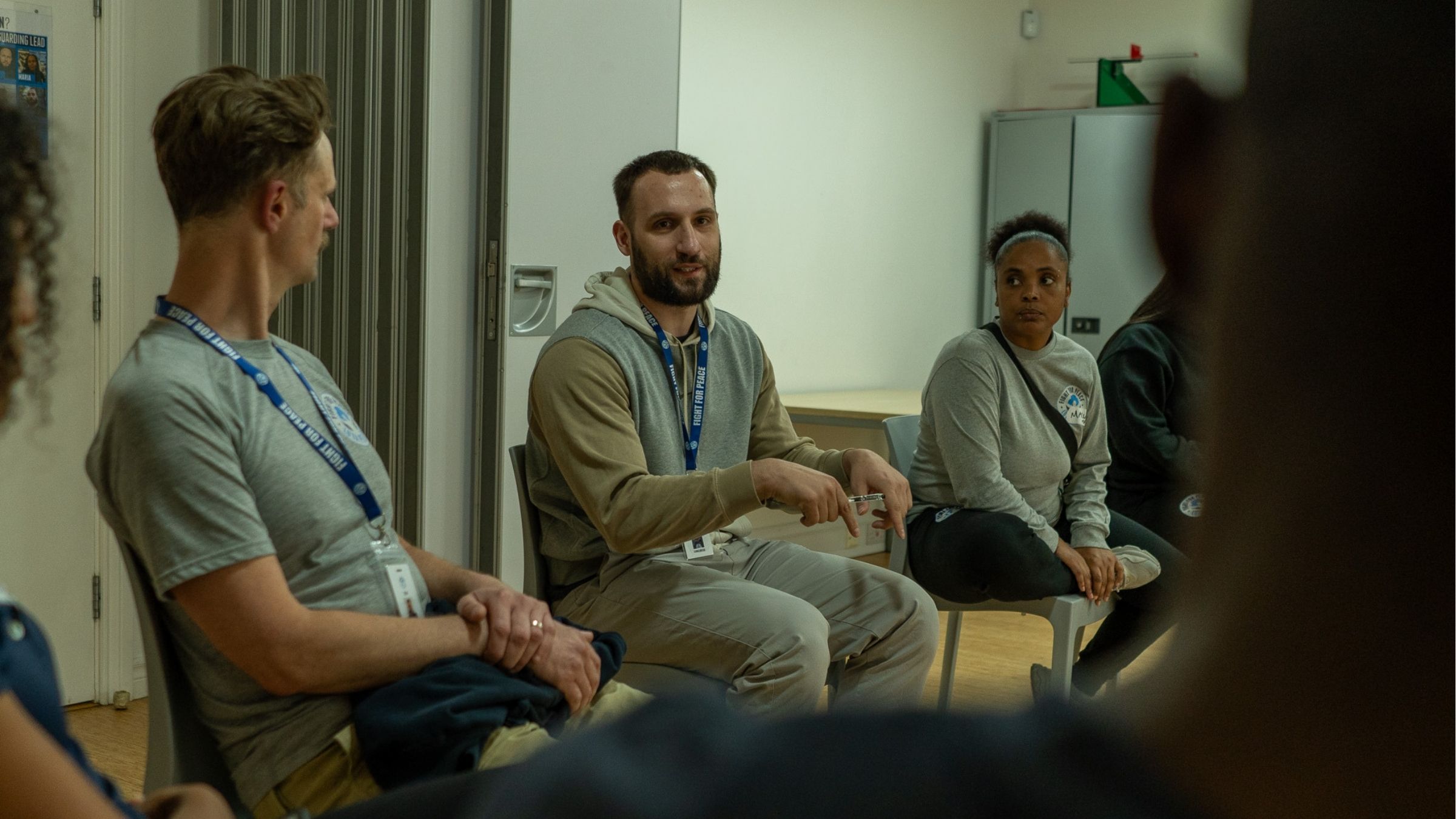
Are there any specific personal development initiatives you are excited to introduce into the sessions?
“We’ve had some young people ask for the personal development sessions to happen every day, which is interesting and shows that they’ve really valued them.
Lots of young people want to think ahead, and in terms of goal setting, we’ve focused on giving young people more things to look forward to, getting them to recognise those goals and think about what they want for their future.
Young people are coming up with different ideas about what sessions they would like to see. These creative learning sessions will take place on Mondays and use different themes, including Mental Health Day, Kindness Day and other national awareness days, and embedding those themes into the sessions. Those themed sessions create different ways of learning and exploring things, and we’ve also got creative sessions around maths, creating rockets and other activities that can be built around a particular theme.
For example, if you add too much baking powder to a solution, it’s going to explode. We can use that as a way of talking about anger and exploring those ideas through more creative ways of learning.
On Fridays, we’ve got Homework Club starting back up again, with a qualified tutor and teacher coming in to lead.
We’re not creating something new; a lot of it has already been done. It’s about reimagining the historic work that has happened within the organisation, thinking about how we keep it going and how we keep it alive.”
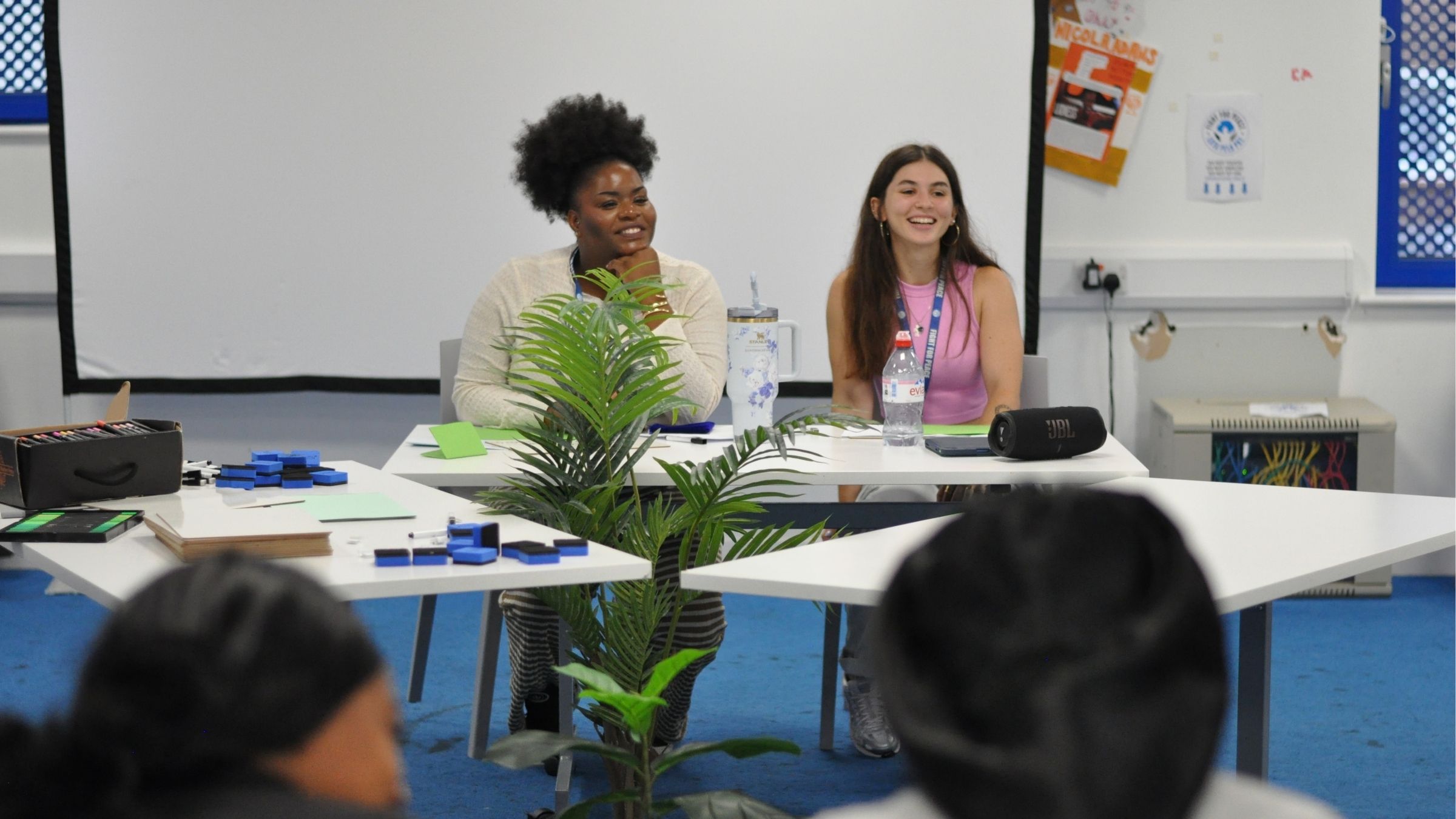
What are your hopes for every young person who walks through our Academy doors?
“I want people to see how young people are valued here at Fight for Peace, because that helps make the space feel safe for them to come to. We’ve had young people come to us with some very serious situations they’re dealing with. The reputation of the organisation makes them feel that it’s a safe space to go to and that there will be someone there to address what they’re going through because they have no one else to turn to.
We had one young person come in and asked if he wanted to do a boxing session. He said no, he wanted a mentor. I told him that wasn’t quite how it worked, and he then asked, “Can you be my mentor?” The fact that a 23-year-old could feel safe enough within a minute to ask another youth worker in the organisation to be his mentor shows that we are creating the right kind of space.
Our biggest promotion isn’t what we say we do. It’s how young people talk to other young people about their experiences and how the community perceives us.
Ultimately, I want every young person who comes to Fight for Peace to feel valued, listened to and safe enough to be themselves, to be creative and to share their ideas. I want them to recognise how capable they are and understand that they have a role in shaping their own narrative and their own future.”
We have Youth Mentors onsite, at our Academy in North Woolwich, every day of the week. If you ever want to share an idea, get stuck into youth leadership or simply just need someone to listen, our doors are always open.