
In part one of our athlete spotlight series, we met Fight for Peace boxer Aslam – known in the gym as “Astonishment” – and learned about his journey into competitive boxing. Now, we dive into one of the biggest misconceptions about the sport: the belief that boxing creates violence. For Aslam, that assumption couldn’t be further from reality.
Much of the public view of boxing is shaped by the entertainment around it. The media hype, the staged tension at press conferences, and the theatrics surrounding major fights can create an image of a chaotic, aggressive world. But this spectacle often overshadows what actually happens inside real gyms, where discipline, respect and emotional control are central to the sport.
Research consistently supports this reality, highlighting that structured combat sports programmes have been shown to reduce aggression, build self-control and improve young people’s ability to manage pressure. International bodies and large-scale studies highlight that athletes in boxing and martial arts usually display calmer behaviour and stronger emotional regulation than their non-training peers.
This is exactly what boxers like Aslam experience day to day – a world far removed from the stereotype. “Boxing actually does the opposite of making people violent,” he says. “I think it’s a gentleman’s sport. It’s about having class, and being disciplined. Most people who do combat sports are the most chilled people.”
For him, boxing hasn’t ignited aggression, it’s taught calm. “Since starting boxing I’m more relaxed and more chilled… I’m not the loudest in the room, and I have a calm manner in the ring and outside, no matter how much pressure there is.”
Aslam believes this calmness is built through constant exposure to pressure. “With boxing, you’re always going through adversity. People are shouting, everything is fast, and someone is trying to take your head off. To be calm in those moments is the best thing.”
He sees pressure not as something to fear, but as something necessary. “Everyone should at least try a combat sport. We all need adversity and struggle. It helps character development and personal development. Life’s too short to be in your comfort zone.”
Although Aslam’s journey into boxing began unplanned, his natural talent and the encouragement of his coaches quickly guided his path. “At first I started boxing because, I’ll be honest, there was nothing better to do. I just did it as a hobby, not to put pressure on myself…. I never said I wanted to compete, but the coaches noticed me and asked if I wanted to join the competitors team.”
Instead of rushing into the ring, Aslam trained for two years before his first bout, demonstrating patience, discipline and a determination to improve. “I’m grateful I didn’t rush. It’s better to have the basics right first. I’d rather someone has good defence, than just good offence and go into the ring too soon.”
Now with several bouts on his amateur record, he sees how much there still is to learn – another reminder of how deep the sport runs beneath the surface. This long-term mindset, built on patience and steady growth, reflects what he witnesses in others around him too.

In the gym, he’s seen people transform through the structure and discipline that boxing demands – finding confidence, focus and a sense of direction they didn’t have before. “I hear in the gym that boxing has saved people’s lives, and made people better,” he says. “Even if you get one percent better every day, that’s enough.”
He also stresses how vital a supportive environment is for young boxers to grow. “It’s important to have a good team around you, people that are passionate… and have those basic soft skills and people skills to understand what I’m doing wrong, and give constructive feedback in a mature manner. If someone goes in grilling you for every wrong move you make it could have an impact on confidence and progression.”

At Fight for Peace, this emphasis on care and communication is central. All coaches are trained Life Champions mentors, supporting young people far beyond technique. They guide emotional wellbeing, build confidence and help navigate challenges inside and outside the gym – pairing the discipline of boxing with consistent mentorship so every athlete feels seen, supported, and positively challenged rather than encouraged toward aggression.
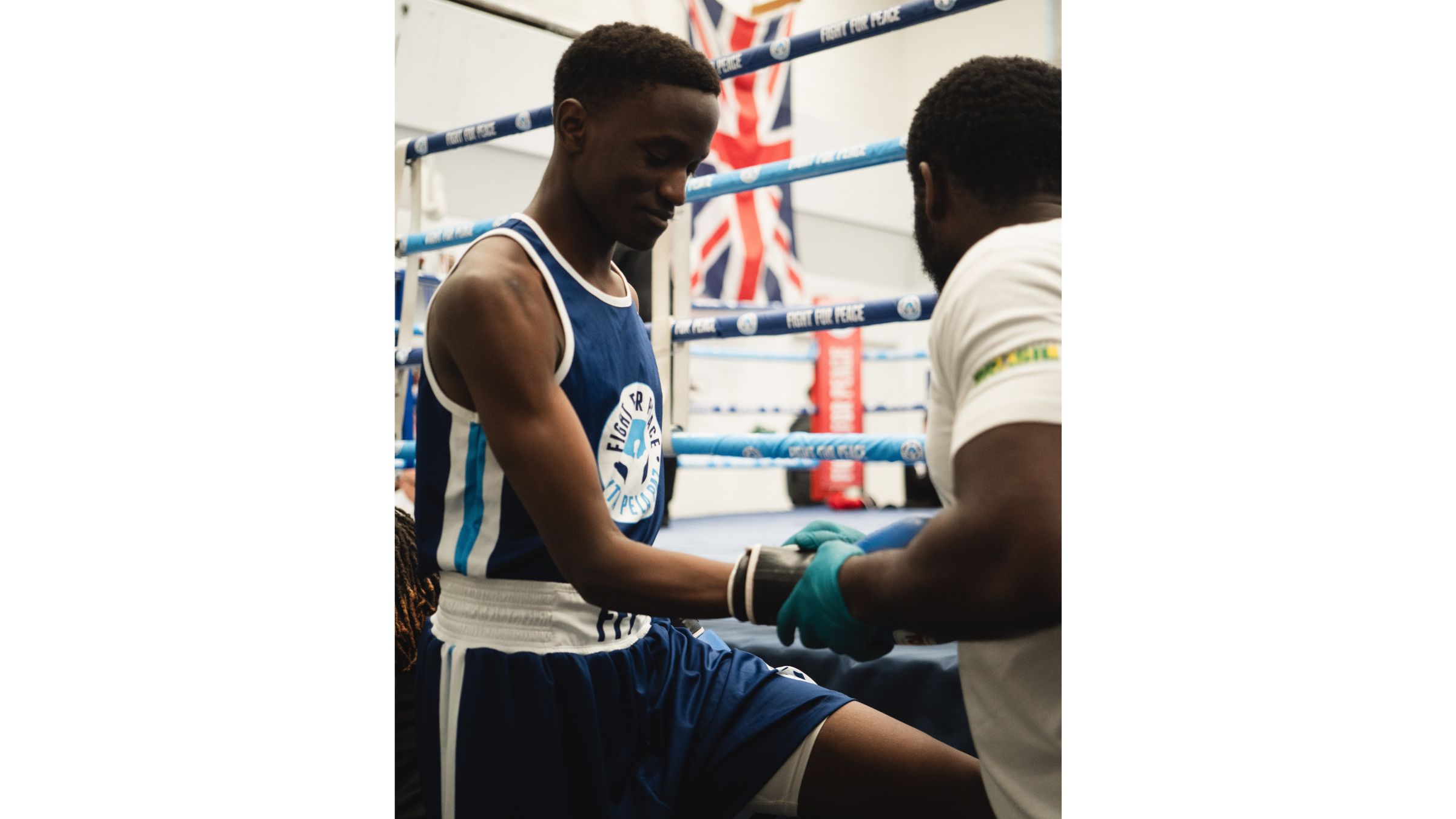
Within this environment, boxers like Aslam also learn the importance of self-leadership. While the community provides guidance and encouragement, the individual nature of the sport teaches young people to take ownership of their journey.
“If you’re going to do boxing, you have to lead yourself in the ring. Nobody can carry you. Coaches guide you, but they can’t control the fight. It’s your journey. Win or lose, it’s on you.”
Through Aslam’s story, the truth about boxing becomes clear: it is not a sport that creates violence, but one that channels energy into focus, patience, leadership, discipline and self-discovery. Behind the noise and spectacle, the real heart of boxing lies in young athletes like Aslam who remain calm, grounded, and committed to continual growth.